- Oct 9, 2025
7 Eco Friendly and Ethical Halloween Ideas for Families and Educators
- Megan O'Malley
There’s no denying that kids love Halloween. It can be a chance for them to get creative, dress up and have fun with friends and family. But it can also be a festival of waste, cultural insensitivity, and sugar-fuelled overconsumption. For families and educators raising thoughtful and conscious kids, Halloween is a chance to do things differently and show kids it’s possible to have fun and live your values at the same time.
Here are 7 eco-friendly and ethical Halloween ideas to help you celebrate in a way that’s good for people and planet.
1. Start With a Conversation About Values
Before you start planning costumes, decorations or treats, talk with your kids about how they want to approach Halloween in line with their values of caring for people and planet. Let them know about the huge amounts of waste being generated each year from single use decorations, plastic costumes and individually wrapped lollies, and the impact this has on the environment.
Ask questions like:
How can we reduce waste and protect the environment this Halloween?
How can we have the most fun and create the least amount of harm?
What choices can we make so that Halloween is fun for everyone?
Setting intentions together, helps kids connect their choices to their values and builds a habit of thinking through decisions. It’s also a great way to give them agency over their impact, rather than having adults lecture them about what they should be doing.
2. Ditch Fast Fashion Costumes
Most store-bought costumes are made from cheap polyester that ends up in landfill after one wear. Instead:
Get creative with what you already have.
Buy something from the local op shop.
Host a costume swap with friends or your class.
Encourage kids to make their own from recycled or natural materials.
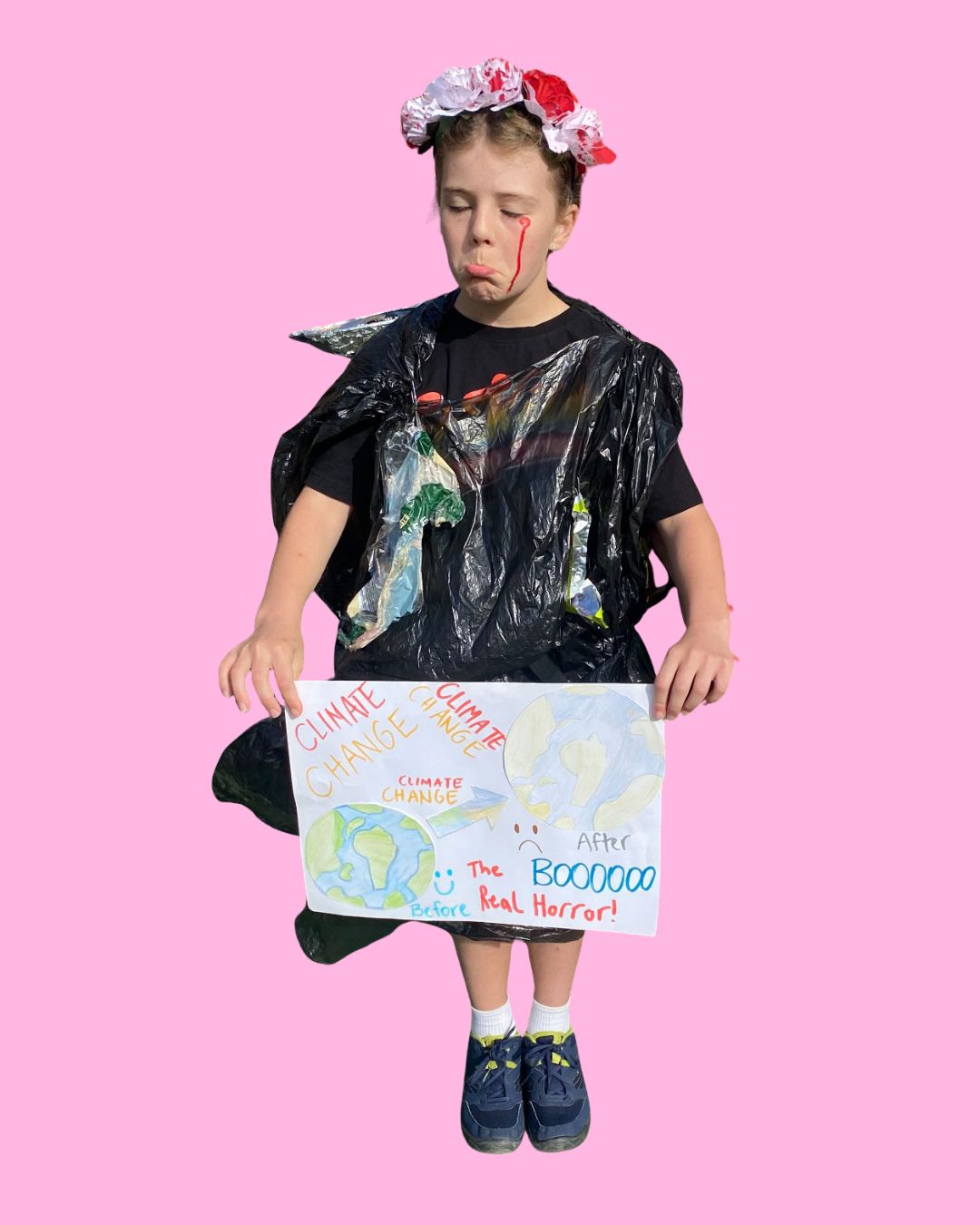
Children can also choose to create costumes that share a social or environmental message. The lovely Stella (pictured below) dressed up as a dying Earth for Halloween last year, a powerful and scary costume indeed.
3. Talk About Cultural Appropriation
Not every costume is fair game. Take the time to talk with kids about why dressing up as someone’s culture, religion or race isn’t ok. If you’re unsure about how to go about this, here is a fantastic article with lots of guidance.
If your kids are in Grades 4-6 here are a couple of videos you can share with them:
These conversations help children learn how to be respectful of other people.
4. Choose Ethical & Sustainable Treats
Unfortunately, a lot of Halloween chocolate is linked to poor labour conditions and deforestation. There are a few different alternatives you can try, depending on your budget:
Fairtrade or Rainforest Alliance certified chocolates
Locally made chocolates or lollies
Non-food treats like seeds, pencils, or stickers
Make your own treats
Create Halloween themed zines (photocopy and hand out!) or some other sort of craft from whatever you have lying around at home or the classroom
Use this as an opportunity to show kids that everyday choices can support fair working conditions and a healthy environment.
5. Make Decorations Low-Waste
Skip the plastic cobwebs and inflatable monsters that last one season. Instead, try:
Natural decorations like pumpkins, dried leaves, branches, and beeswax candles
Break out the craft supplies, raid the recycling bin, get creative and make some decorations using what you already have at home or school
Compostable or reusable decorations
Eco friendly Halloween decorations can be just as fun and are so much better for the planet.
6. Ditch the Pumpkin and Try a Seasonal Fruit
While pumpkins are the traditional choice for Halloween carving, they are actually a Northern Hemisphere crop at this time of year. In Australia, they are out of season in October, which means they are often imported or hothouse-grown, hard to carve, and can cost over $15 each. Most end up in landfill after the night is over.
This is a great opportunity to talk with kids about seasonal eating, where our food comes from, what grows locally, and how choosing in-season produce supports local farmers and reduces waste.
For a thrifty and sustainable twist, try carving a seasonal fruit or vegetable instead. Papaya, watermelons or pineapples work beautifully. They are easier to cut, smell amazing, and you can eat the insides. Someone has already tested a few of these options, and you can see their creative results here.
7. Get to Know Your Neighbours
Halloween is one of the few times people still knock on each other’s doors. Use it as a chance to get to know your neighbours and learn more about the people in your community. Stop for a chat if you can and encourage the children you’re with to ask questions. This will build social skills and help children to feel connected to their community.
Remember It’s About Fun, Not Stuff
The heart of Halloween is imagination and connection, not plastic pumpkins or cheap lollies. The most sustainable Halloween is intentional, not perfect. It’s about having fun in lasting and meaningful ways.
Sign up to the Newsletter
Subscribe to be the first to receive news and updates!
I would like to acknowledge the Traditional Custodians of Country across this continent. I pay my deepest respects to Elders past and present. Aboriginal and Torres Strait Islander peoples are the original storytellers, educators, and change makers of Country. For generations, they have been on the frontlines in the fight for justice, truth, and sovereignty. Sovereignty has never been ceded. This always was, and always will be, Aboriginal land.